


In the three years since Roe v. Wade was overturned — ending nearly 50 years of federally-protected abortion rights in the U.S. and allowing states to restrict or ban abortion altogether — pregnant people seeking abortions face more barriers than ever. From traveling across state borders and losing wages to paying for childcare, transportation and accommodation, clinical fees and more, the cost of getting an abortion is so high that it has created a new category of medical debt in the U.S. — abortion debt.
In addition to debt, pregnant people in the U.S. now also face an increased risk of criminalization and incarceration, even for miscarrying. Healthcare providers also risk being criminalized for providing reproductive healthcare in restricted states. As a result, many are leaving to practice in other, less oppressive conditions, making healthcare even harder to access for Black and brown communities, women, and the working class in these states.
While the U.S. has regressed from protecting to restricting abortion rights, the global struggle for abortion rights has made great strides forward, particularly in Latin America. Since 2018, the grassroots feminist movement known as the Green Wave has spread across the region, leading to the legalization of abortion in Argentina in 2020 and in Colombia in 2022.

Green Wave protestors demonstrate in Buenos Aires, Argentina. (Marcelo Endelli / Getty Images)
In a region characterized by religious conservatism, weak democratic institutions and histories of military dictatorship, abortion rights activists successfully organized not only against abortion restrictions, but in favor of increased access to reproductive healthcare. While this achievement cannot be attributed to the efforts of any one organization, the emergence of abortion accompaniment networks played a crucial role in destigmatizing abortion and helping pregnant people assert their reproductive autonomy. These networks helped shift public opinion, build political power, and keep people safe when the state failed to care for them.
What could we learn from the accompaniment model’s successes to build networks of support to help each other navigate debt, access resources, and build communities of care in the U.S?
The body as a territory
In the 2000s, organizers in Latin America formed the first abortion accompaniment networks to disseminate the medication needed to self-manage abortion, as well as to support pregnant people throughout the process of self-managing their abortions. Led entirely by volunteers and feminist collectives, these networks rely on lay expertise, mutual aid, and peer support to help individuals who are marginalized, harmed, or exploited by state healthcare systems.
In addition to providing practical support, abortion accompaniment networks like Argentina’s Socorristas En Red (“first responders”) also encouraged the women they accompanied to think critically about the conditions which brought them there.
“We speak a lot about patriarchy, women’s rights, and different types of violence. By meeting with them once, by only speaking with them for a few hours, we really change people’s lives. That’s amazing, and that creates a sense of responsibility as well. We are discussing politics every time we meet with someone.”
– Lu, Socorrista
In addition to political education, abortion accompaniers prioritize the needs of the individual self-managing their abortion through empathetic, compassionate, and judgement-free support. Providing person-centered care rooted in bodily autonomy can be transformative for both the accompanier and the accompanied.
“Autonomy comes from this idea of seeing the body as a territory. It is yours, it is your territory. Sometimes abortion is the only decision which some of the people we accompany have made autonomously.”
– Lu, Socorrista
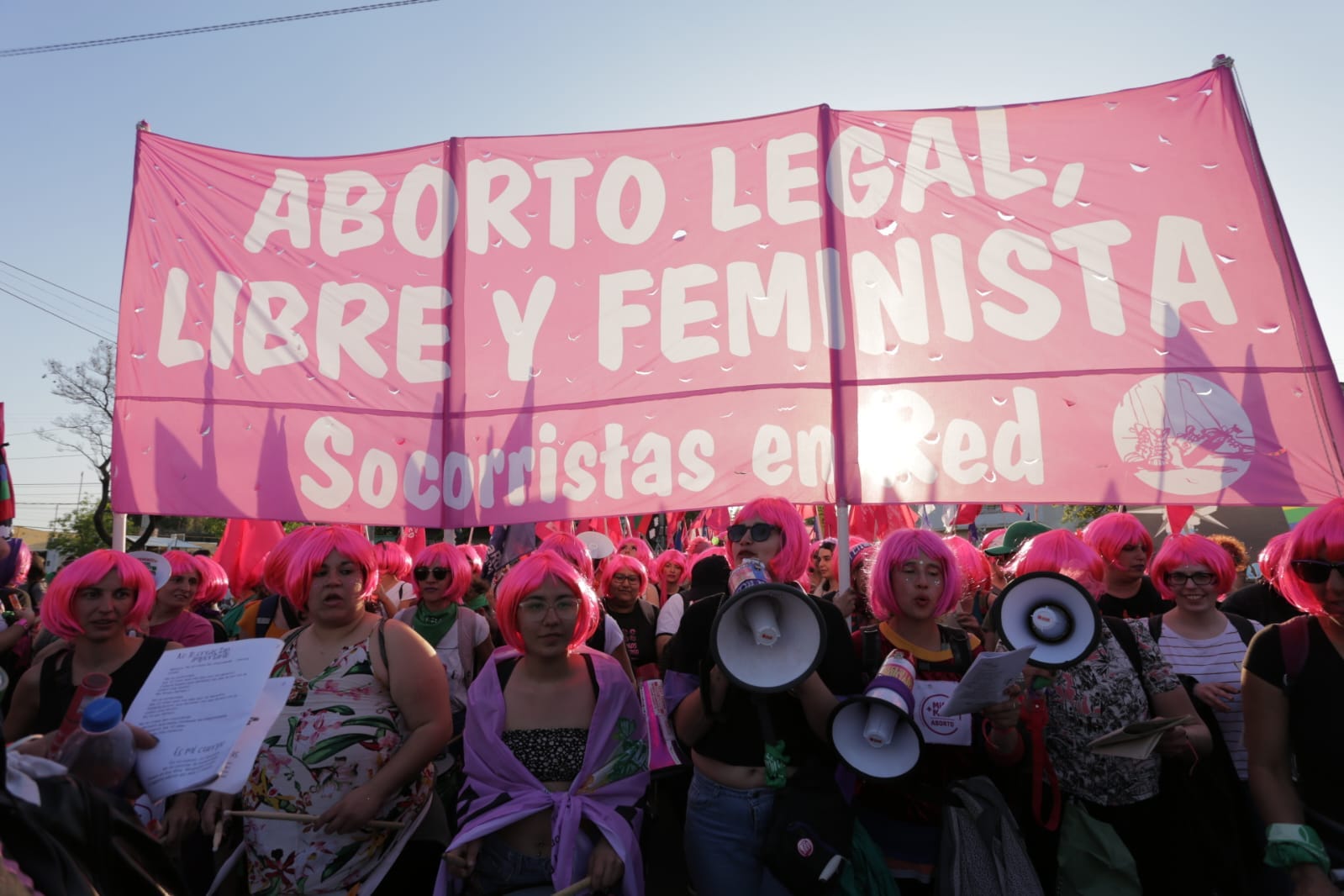
Socorristas assemble at an annual feminist gathering in San Luis, Argentina. (Socorristas En Red)
A debt of democracy
The massive street protests that characterized the Green Wave took off following the 2015 emergence of allied feminist movement Ni Una Menos, which called for an end to gender-based violence following the brutal murder of a pregnant teenager in Argentina. At the time, efforts to legalize abortion faced religious and political backlash, but the movement to end femicide was broadly supported.
Abortion rights activists brought their movement into mainstream view by successfully arguing that abortion restrictions were a form of gender-based violence because they endangered the lives of women forced to seek out unsafe abortions, perpetuating a form of state-sanctioned violence against marginalized women. By observing that women without these rights were not equal citizens, organizers made the claim that Argentina and other states banning abortion owed women a “debt of democracy.” By connecting the fight for abortion rights to the fights for gender equality and democracy, Green Wave activists used an existing political opportunity to expand their fight for abortion legalization.
“All these organizations and networks brought the discussion into everyone’s houses and mouths. We started speaking about violence against women, particularly — women dying at the hands of their husbands, boyfriends, ex-husbands, bosses, neighbors, uncles. We were on the streets protesting for feminist rights and human rights!” – Lu, Socorrista
Beyond the Green Wave
In addition to legal advocacy and massive street protests, the direct services provided by accompaniment networks were a crucial element of the Argentine abortion rights movement. By destigmatizing abortion, developing shared political analyses, centering the needs of the most marginalized communities, creating alternative infrastructures of care, and modeling mutual aid rooted in solidarity over charity, accompaniment networks provide a powerful model of community-based care which has since been adopted across Latin America, the Caribbean, and the Global South.
The success of the Green Wave abortion rights movements demonstrates that legal victories follow culture change, not the other way around. When ordinary people come together to care for their communities, the consequences can be revolutionary.
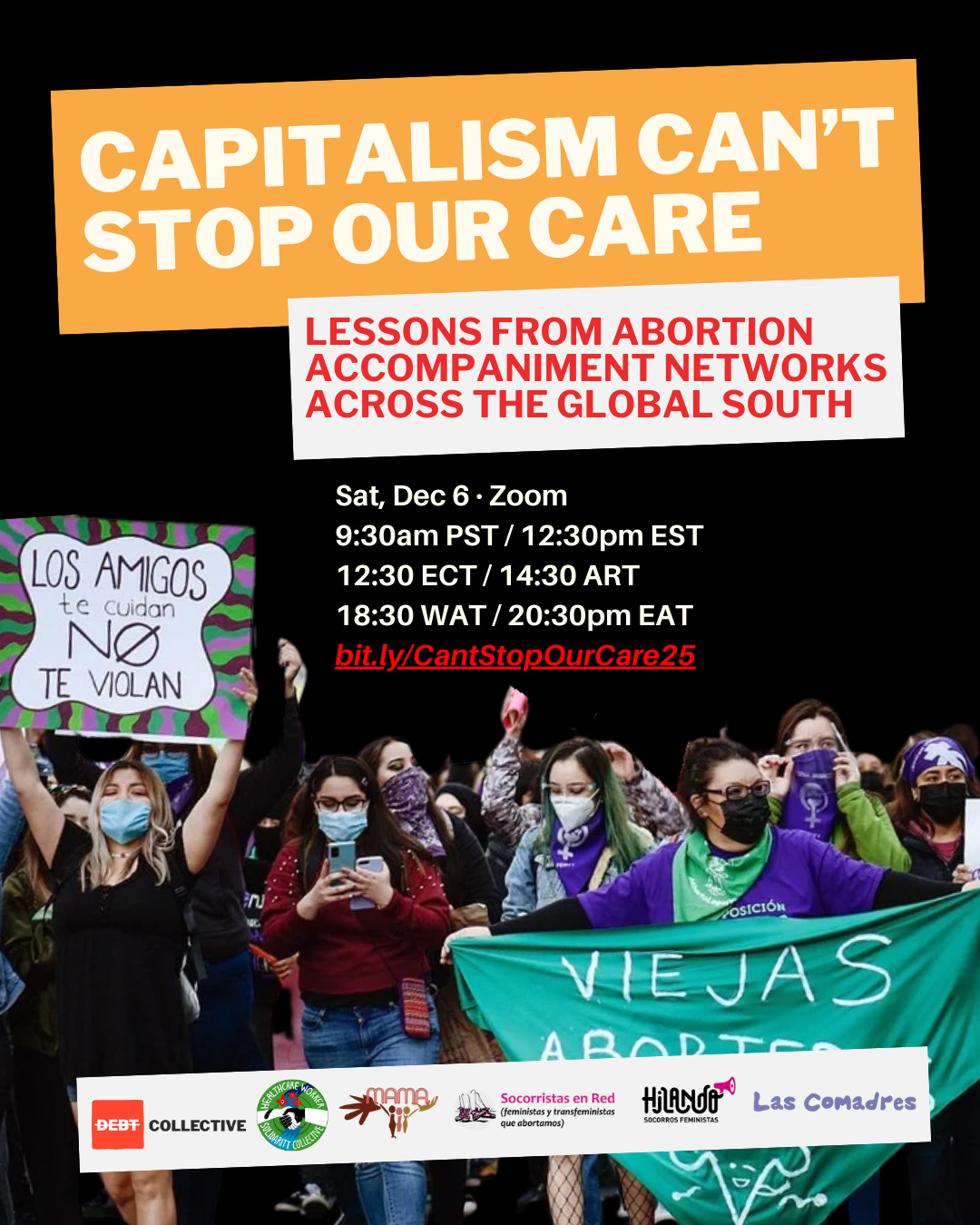
This Saturday, December 6, join us for Capitalism Can’t Stop Our Care: Lessons from Abortion Accompaniment Networks Across the Global South.
The Debt Collective’s Healthcare Worker Solidarity Collective will host an international panel discussion with leaders of abortion accompaniment networks and feminist collectives from Ecuador, Argentina, and Sub-Saharan Africa. Together, we’ll explore the potential of the accompaniment network model to transform care into collective power through mutual aid, feminist organizing, and international solidarity.
Watch the full "Capitalism Can't Stop Our Care" workshop on youtube: https://www.youtube.com/watch?v=63tqvw0IU30&t=23s
All of Lu's quotes are BRILLIANT! So amazing that you'll have organizers like her all together for the panel on Saturday <3