


Personal finance media is ubiquitous. Whether from websites like Money.com and Investopedia, radio shows like Dave Ramsey’s, or your local newspaper’s money advice column, the underlying message is that if you’re disciplined enough, you can achieve your financial goals and avoid debt.
It’s been over a year since President Donald Trump and the GOP passed the One Big Beautiful Bill Act (OBBBA), and most Americans — especially mixed-status and undocumented families — have found that household budgeting can only do so much. Sadly, current projections through 2035 find that the worst of OBBBA is still to come.

Yet the world of personal finance regurgitates the same guidance as if OBBBA hasn’t already wreaked havoc on our ability to stock our fridges, see a doctor, or even come home to our families over the last year. The Consumer Financial Protection Bureau (CFPB) was created for this very reason — in the wake of the Great Recession — to go after financial institutions found to be engaging in abusive practices. So of course, OBBBA cut its funding in half.
Despite Trump’s attempt to rebrand it to “Working Families Tax Cuts,” the OBBBA represents the largest transfer of wealth from the working-class to the rich in U.S. history. Financial literacy alone won’t be enough to weather the devastating impacts of this legislation. We also need economic disobedience: organized actions that break the taken-for-granted financial relations between the working and ruling class. We need to flip the script. We need to put power in the hands of everyday people and enact material change. Let’s start by examining the Big Beautiful Bill’s impact on families, what financial literacy outlets claim will help, and what could actually make a difference instead.
Personal finance alternatives for everyday budgeting
NerdWallet says you can “recession-proof” your trip to the grocery store by buying in bulk, going to cheaper grocery stores, and saving leftovers. Groundbreaking.
But OBBBA’s Supplemental Nutrition Assistance Program (SNAP) cuts — the largest in the program’s history — have led to over 4.1 million people losing their benefits entirely. Budget for food with what, exactly? These cuts will only continue to escalate over the coming years as states are forced to take on administrative costs and SNAP benefit payments, which were previously covered by the federal government.

Economic disobedience can offer an alternative to solely budgeting. During the Food Riot of 1931 in England, Arkansas, a group of farmers and their wives demanded food from stores downtown to feed their starving families. There are also many peaceful — though just as radical — means of working together to feed the working class, such as non-violent direct action that reclaims abandoned lots for community food garden use. Mutual aid food distributions are another way communities come together to both meet nutritional needs and agitate around political forces that make mutual aid (not charity!) vital in the first place.
Student loans and medical debt under OBBBA
A common personal finance goal is to raise your credit score — but OBBBA’s Medicaid cuts will likely exacerbate existing credit score gaps. Already, people who live in states that refused to expand Medicaid coverage under the Affordable Care Act have worse credit scores thanks to the additional medical debt they carry.
But medical bills “don’t have to be a burden,” according to personal finance media like the Points Guy featured below. Credit cards, when used to cover health expenses, “can provide you with financial relief.” Like many financial literacy hubs, the website may receive a kick back if you sign up for one of the reviewed cards.
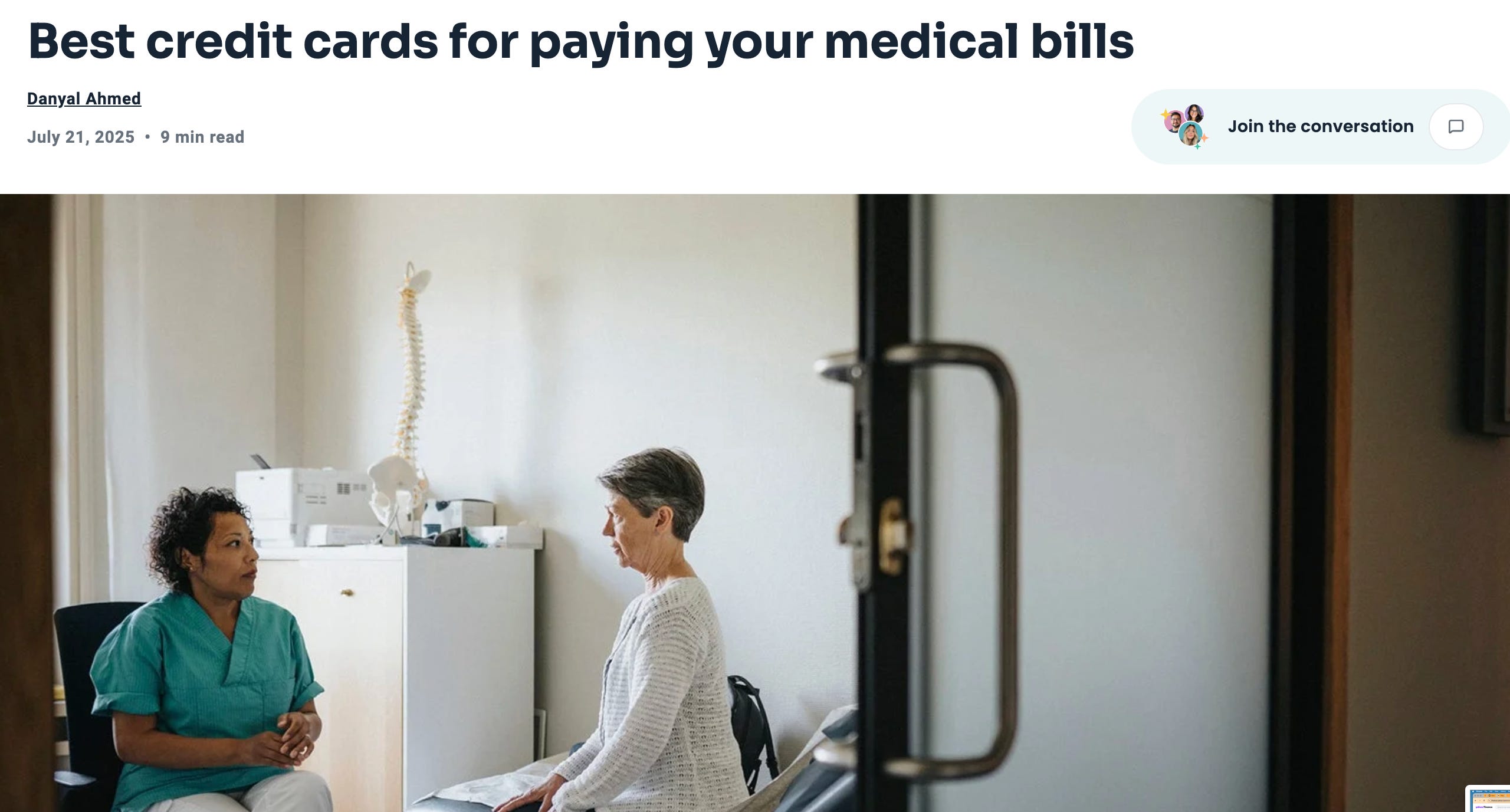
Because over 1,000 rural hospitals and healthcare providers are closing or curtailing services due to OBBBA’s Medicaid cuts, patients will have to spend more on transportation, child care, and time off of work to get to appointments further away. And credit cards are supposed to fix this problem??
The OBBBA’s changes to student loans have also led to higher student debt payments. For example, more than seven million people enrolled in the Saving on a Valuable Education (SAVE) plan have until September 29 to enroll in a new — and likely more expensive — federal loan repayment plan.
While debt management strategies might lessen the strain of credit card bills and student debt balances for a handful of people, we should also fight for mass relief in concert. Can’t Pay, Won’t Pay, the Debt Collective’s economic disobedience manifesto, highlights a critical financial tool: debt strikes, or a mass refusal to pay student loans, medical debts, or other household debts. Debt strikes can help us go beyond paying down debt, another top financial goal — instead, it could abolish these debts all together. Furthermore, collective debt strikes contribute to mass movements that can secure reparative public goods. This addresses the root causes of unjust debts to begin with.
Retirement and taxes
On May 31, 2025, Iowa’s Republican senator, Joni Ernst, responded to a critique that OBBBA’s Medicaid funding reduction could kill people with, “We all are going to die.” Around three months later, she announced her retirement from the Senate.
But before we meet the Grim Reaper, maybe we’ll be like Ernst and get to retire. So could the tax cuts in the Big Beautiful Bill make it easier to save for our golden years, as one wealth manager told GOBankingRates?
For rich people, absolutely. The top 1% will get an estimated $73,850 tax break in 2027, according to the Center on Budget and Policy Priorities’ projection. People who make at least a million dollars annually will cling to $104,580 more in after-tax income.

Meanwhile, a February 2026 report from the National Institute on Retirement Security found that the median worker has just $955 saved in their retirement account. IRS data also showed that during the 2026 tax season, the average federal refund only went up by $333. Given this data, it’s a fantasy to suggest a tax bill so skewed towards the capitalist class could make up for both parties colluding with corporations to deny seniors a guaranteed and dignified retirement.
Yet personal finance media continues to peddle the following bogusness:
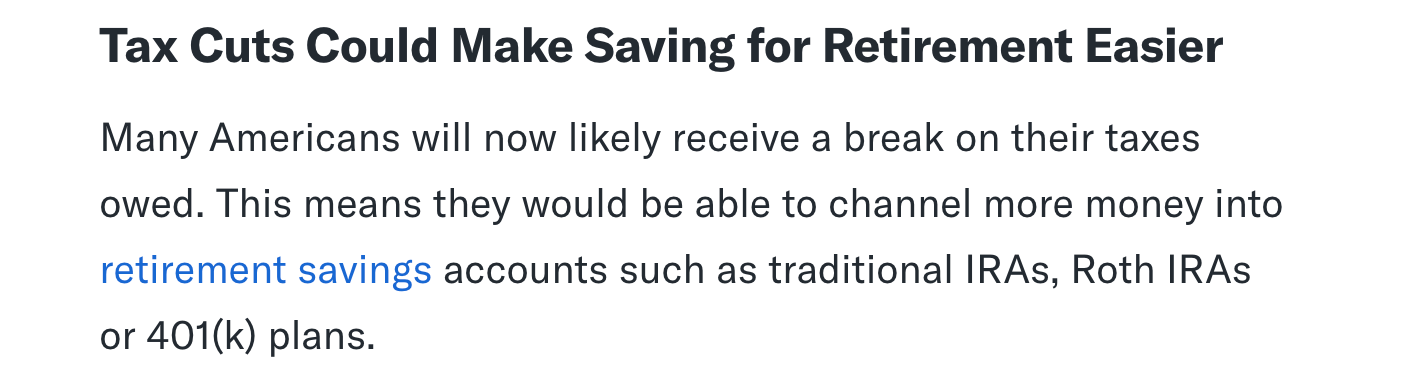
If you want an even bigger tax “break” than you’d get under the OBBBA, you can try this economic disobedience tactic: war tax resistance. This strategy was developed during the Vietnam War to withhold money from the U.S. imperial machine and the goal is to pay little or no federal taxes, whether through legal avenues or via civil disobedience. But as the National War Tax Resistance Coordinating Committee notes, the point isn’t to hoard wealth; many war tax resisters redirect their tax savings to domestic poverty relief efforts, aid groups in war-ravaged areas, or other politically aligned organizations.
Who financial pundits ignore
For many, the OBBBA’s biggest personal finance impact hasn’t come from tax breaks, entitlement cuts, or gutted consumer advocate agencies, but courtesy of supercharged funding to the country’s largest law enforcement agency, Immigration and Customs Enforcement (ICE). It’s tough to budget when your household’s breadwinner is kidnapped. And despite the scope of Trump’s ethnic cleansing campaign, very few financial experts consider how the imminent threat of deportation affects immigrant families.
A personal finance mindset might instead consider how to benefit from OBBBA’s extravagant ICE funding. Sign up for the gestapo and get up to a $50,000 signing bonus and student loan cancellation. What a savvy financial move! smh…
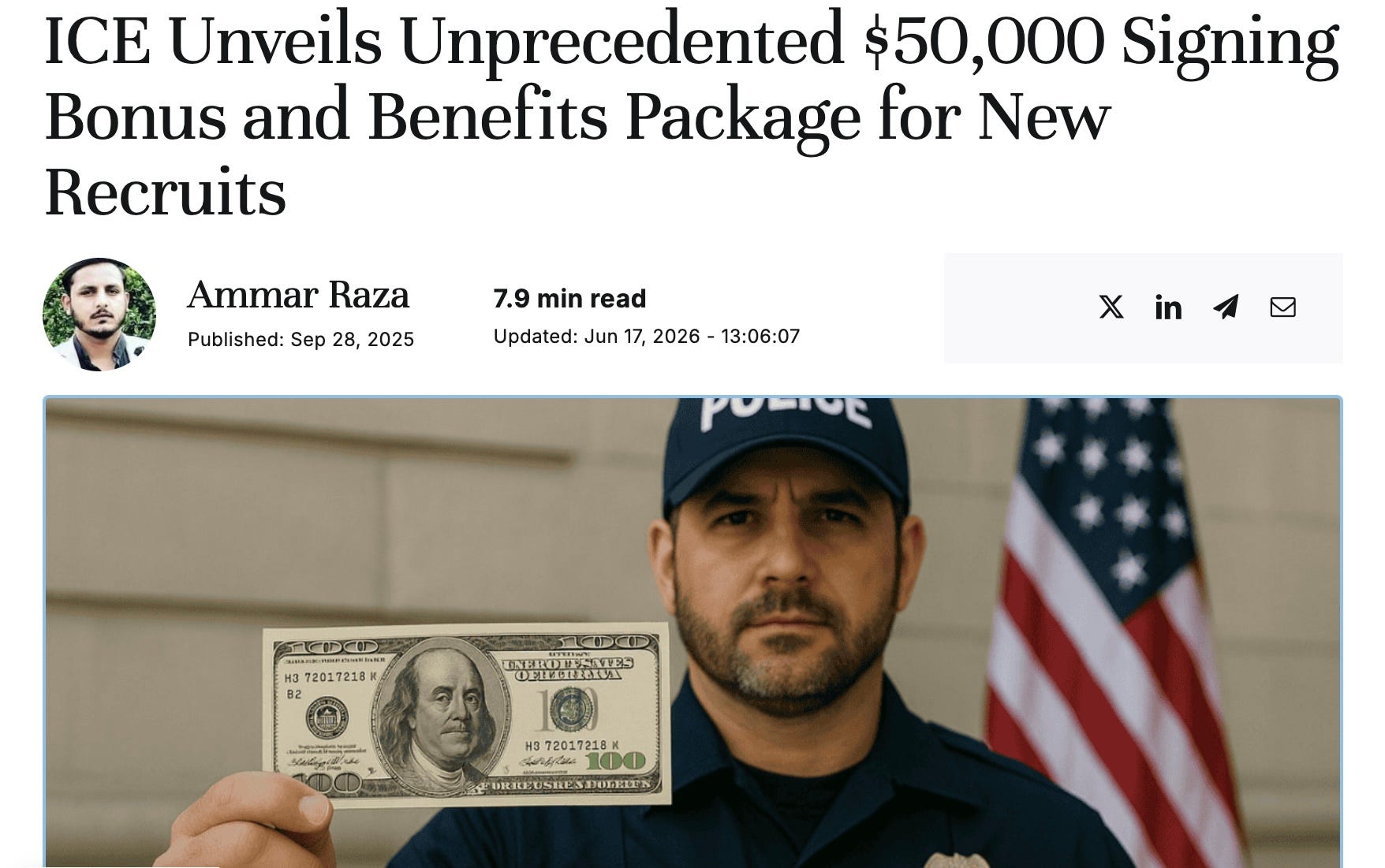
Jokes aside, there’s evidence that this individualistic mentality has already brought members of the working class in to join the U.S. ethnic cleansing forces — even if that means terrorizing fellow community members. A 2020 study found that Latino ICE and Border Patrol officers cite not an ideological urge or disassociation with their ethnic background, but money, career stability, and benefits as the top reasons they joined the Department of Homeland Security (DHS). To be sure, everyone deserves access to a job if they want one; that’s why there are campaigns for a federal jobs guarantee. But in part because of an apolitical personal finance media ecosystem that encourages us to look at our budgets individually, when we inevitably struggle under capitalism, we don’t realize the ways we can join forces to demand more.
Fortunately, economic disobedience can provide leverage in the fight against the current DHS terror campaign. Organizers at General Strike U.S. cite that just 3.5% of the population participating in a strike could halt the economy — and in terms of immigrant rights, general strikes are gaining traction. In January 2026, 50,000 protestors in Minneapolis skipped work, school, and shopping. Resistance also comes from those being held captive, such as work and hunger strikes at GEO Group-run immigrant detention centers like Delaney Hall in New Jersey.

Bigger than a financial plan
Financial literacy, as Helaine Olen noted in her book Pound Foolish, is usually brought to us by corporations that claim to help consumers while simultaneously lobbying against consumer protections. Though financial literacy has its benefits, the media complex that produces it serves to gaslight the masses.
Recognizing this is especially important under the Big Barbaric Bill’s ten-year shadow. Without effective pushback, millions more will be uninsured, starved, and kidnapped — inevitably leading to social murder, a term Friedrich Engels used to describe when people’s lives are cut short because of a society’s inequitable structure.
Instead of stale personal finance advice that’s carbon-copied for every crisis (Budget, repay, and pray to become a capitalist yourself), we’d be better equipped for the next decade with a different message. Collective economic disobedience must be prioritized above individualistic financial literacy gospel. And the stakes couldn’t be higher. If we don’t get creative and break the rules, we will be robbed of everything.
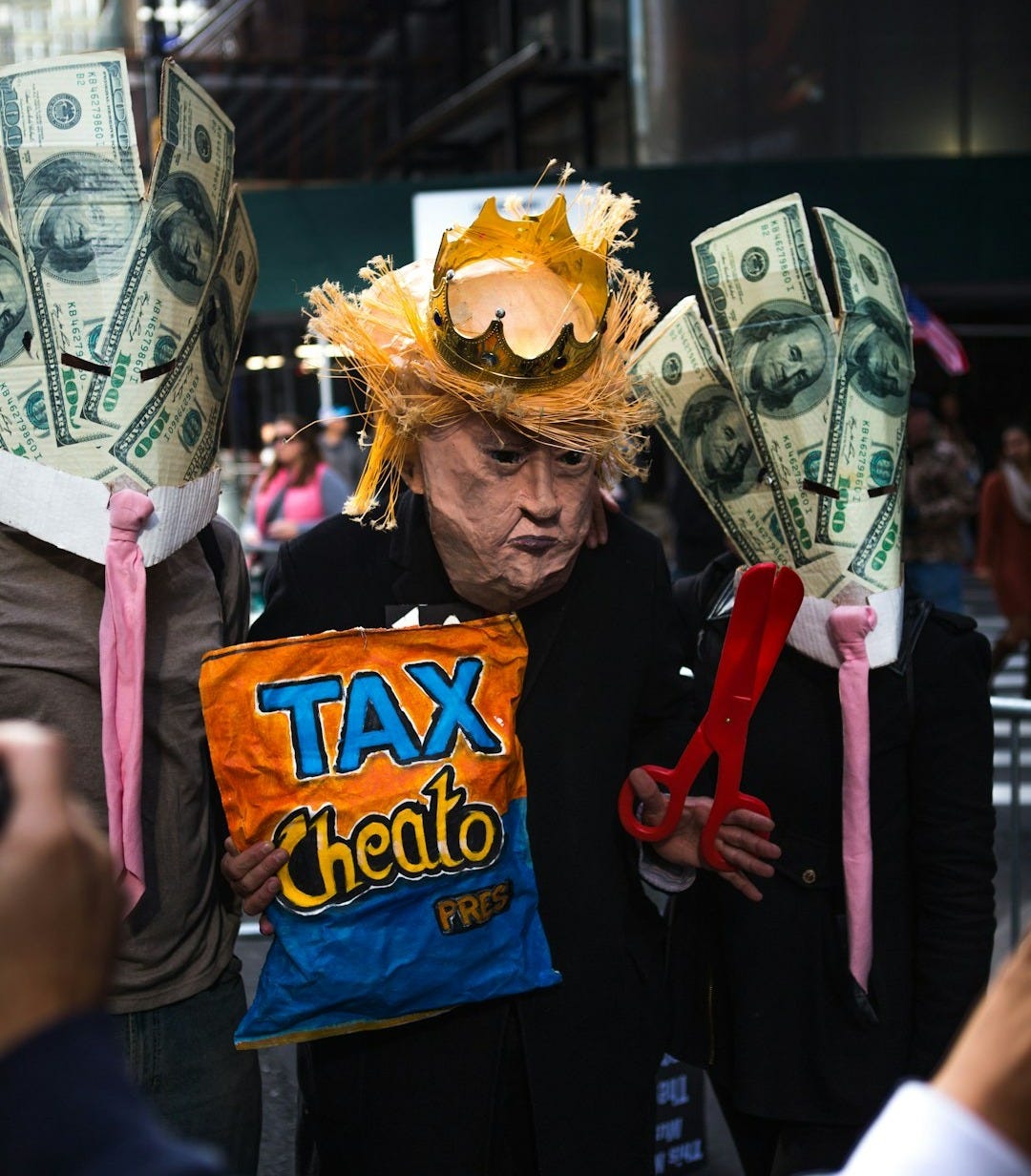
Myriam Robinson-Puche (she/her) is a personal finance freelance writer and a member of Debt Collective’s Creative Comrades team. She has written for Morning Brew, MarketWatch, Bankrate and more. Myriam also previously worked as a financial coach.
Powerful piece. The concept of "financial literacy" itself is misleading. It assumes that working class people simply don't know enough, it puts the blame and onus on us to navigate the unnecessary complexity of financial systems that are literally built to crush us. As a millennial, I used to believe that if I just hustled and pinched pennies and saved...maybe one day, I'd be out of the red. But then I asked myself: I'm being instructed to avoid landmines, but WHY am I even walking on a minefield?!? Why is our financial system like this? That's what really woke me up to the cruelty of capitalism. I feel like I've had to face economic crisis after economic crisis, but each time, the ultra wealthy get bailed out. Thank you so much for writing this!!!
Great article that highlights the importance of collective action and why “financial literacy” won’t save us.